The world of software development is evolving faster than ever before. With emerging technologies, changing user expectations, and increasing demand for scalable digital solutions, staying updated with the latest software development trends is no longer optional—it’s essential. Whether you are a developer, startup founder, or enterprise decision-maker, understanding these trends can help you build future-ready applications and stay competitive in the digital economy.
In this comprehensive guide, we explore the top software development trends in 2026, along with their impact, benefits, and real-world applications.
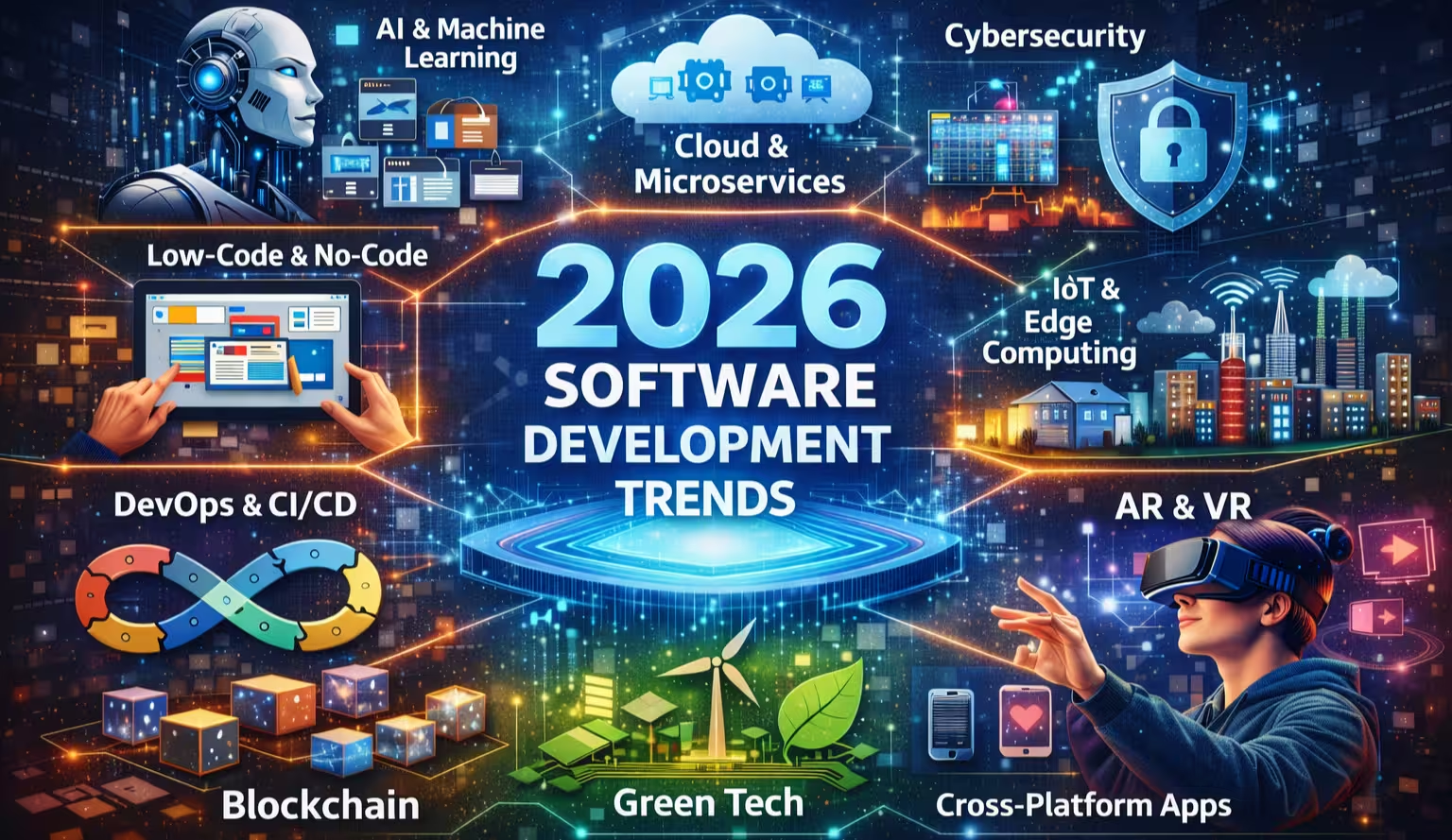
1. Artificial Intelligence (AI) and Machine Learning (ML) Dominance
Artificial Intelligence and Machine Learning continue to revolutionize software development. In 2026, AI is deeply integrated into applications, enabling smarter automation, predictive insights, and enhanced user experiences.
Developers now use AI-powered tools for:
- Code generation and auto-completion
- Bug detection and debugging
- Intelligent testing and quality assurance
AI is also transforming industries through chatbots, recommendation systems, fraud detection, and personalized user experiences. Businesses that adopt AI-driven development gain a significant competitive advantage by improving efficiency and reducing costs.
2. Low-Code and No-Code Development Platforms
Low-code and no-code platforms are rapidly gaining popularity, especially among startups and small businesses. These platforms allow users to build applications with minimal coding knowledge using drag-and-drop interfaces.
Benefits include:
- Faster development cycles
- Reduced development costs
- Increased accessibility for non-developers
While traditional coding remains essential for complex systems, low-code solutions are ideal for rapid prototyping, internal tools, and MVP development.
3. Cloud-Native Development and Microservices Architecture
Cloud-native development has become the backbone of modern software systems. Applications are now built specifically to run in cloud environments using microservices architecture, containers, and orchestration tools like Kubernetes.
Key advantages:
- High scalability
- Improved system resilience
- Faster deployment cycles
Microservices break applications into smaller, independent components, making it easier to maintain and update systems without affecting the entire application.
4. DevOps and Continuous Integration/Continuous Deployment (CI/CD)
DevOps is no longer just a trend—it is a standard practice in modern software development. In 2026, DevOps is heavily focused on automation, collaboration, and continuous delivery.
CI/CD pipelines enable:
- Faster release cycles
- Improved code quality
- Reduced deployment risks
Automation tools help streamline testing, integration, and deployment, allowing teams to focus more on innovation rather than repetitive tasks.
5. Cybersecurity-First Development Approach
With increasing cyber threats and data breaches, cybersecurity has become a top priority. Developers are now integrating security practices throughout the entire software development lifecycle (SDLC).
This approach includes:
- Secure coding practices
- Automated vulnerability testing
- Compliance with global standards
The “shift-left” security strategy ensures that security issues are identified early in the development process, reducing risks and costs.
6. Progressive Web Applications (PWAs)
Progressive Web Applications (PWAs) continue to gain traction as a cost-effective alternative to native mobile apps. PWAs provide a seamless user experience across devices without requiring installation from app stores.
Features include:
- Offline functionality
- Fast loading speeds
- Push notifications
Businesses prefer PWAs because they reduce development and maintenance costs while reaching a broader audience.
7. Blockchain Technology Beyond Cryptocurrency
Blockchain is no longer limited to cryptocurrencies. In 2026, it is widely used in industries such as finance, healthcare, supply chain, and digital identity management.
Key benefits:
- Transparency
- Enhanced security
- Decentralization
Developers are leveraging blockchain to build secure, tamper-proof systems that improve trust and accountability.
8. Internet of Things (IoT) Expansion
The Internet of Things (IoT) continues to expand, connecting billions of devices worldwide. From smart homes to industrial automation, IoT is transforming how we interact with technology.
Developers must focus on:
- Real-time data processing
- Device integration
- Security and scalability
IoT applications are widely used in healthcare monitoring, smart cities, agriculture, and logistics.
9. Edge Computing for Faster Performance
Edge computing is becoming increasingly important as applications require real-time data processing. Instead of sending data to centralized cloud servers, edge computing processes data closer to the source.
Advantages:
- Reduced latency
- Improved performance
- Better bandwidth efficiency
This is especially critical for applications like autonomous vehicles, real-time analytics, and IoT systems.
10. Cross-Platform Development Frameworks
Cross-platform development tools like Flutter, React Native, and Xamarin continue to dominate the mobile development space. These frameworks allow developers to write code once and deploy it across multiple platforms.
Benefits include:
- Reduced development time
- Lower costs
- Consistent user experience
Businesses are increasingly choosing cross-platform solutions to reach both Android and iOS users efficiently.
11. Green and Sustainable Software Development
Sustainability is becoming a major focus in the tech industry. Developers are now prioritizing energy-efficient coding practices and optimizing applications to reduce resource consumption.
Green software development involves:
- Efficient algorithms
- Reduced server usage
- Optimized cloud resources
This not only helps the environment but also reduces operational costs for businesses.
12. Augmented Reality (AR) and Virtual Reality (VR)
AR and VR technologies are becoming more mainstream in industries like gaming, education, healthcare, and e-commerce.
Use cases include:
- Virtual training environments
- Interactive shopping experiences
- Remote collaboration
As hardware becomes more accessible, developers are exploring innovative ways to integrate immersive experiences into applications.
Conclusion
The software development industry in 2026 is driven by innovation, automation, and user-centric design. From AI-powered solutions to cloud-native architectures and cybersecurity-first approaches, these trends are reshaping how software is built and delivered.
For developers and businesses, staying ahead of these trends is crucial for long-term success. By adopting modern technologies and best practices, organizations can build scalable, secure, and high-performing applications that meet the demands of the future.
As technology continues to evolve, one thing remains clear: adaptability and continuous learning will be the key to thriving in the ever-changing world of software development.