Artificial intelligence is changing software development in a big way. What used to take hours of manual work can now be done in minutes with the help of AI-powered tools. From writing code and finding bugs to testing software and helping teams work faster, AI is becoming a practical part of modern development. It is not replacing developers, but it is changing how they work, what they focus on, and how software gets built.
Today, AI is no longer something that exists only in research labs or futuristic products. It is built into code editors, project management tools, testing platforms, and support systems used by developers every day. This shift is making software development faster, smarter, and often more efficient. At the same time, it is also creating new challenges around quality, security, skill development, and trust.
1. AI is speeding up the coding process
One of the most visible changes AI brings to software development is faster coding. AI coding assistants can suggest lines of code, complete functions, generate boilerplate code, and even create entire code blocks based on a short prompt. This helps developers move from idea to implementation much more quickly.
For example, a developer building a login form no longer has to write every piece from scratch. AI tools can suggest form validation, input handling, error messages, and even code structure. This saves time, especially for repetitive tasks. It also allows developers to focus more on logic, architecture, and solving real business problems instead of spending too much time on routine code.
This does not mean AI writes perfect code every time. Developers still need to review and correct what AI produces. But as a productivity booster, it has already become extremely useful.
2. AI is helping developers learn faster
AI is also changing the learning experience for new and experienced developers. In the past, learning a new language or framework often required reading documentation, searching forums, and experimenting for long periods. Now, AI tools can explain code, summarize errors, and suggest how to fix problems in a way that is easier to understand.
A beginner can ask an AI assistant why a piece of code is not working and get a clear explanation. A more advanced developer can use AI to compare different approaches, understand unfamiliar libraries, or convert code from one language to another. This makes learning more interactive and less frustrating.
For teams, this means new developers can become productive faster. They can explore codebases with more confidence and spend less time stuck on small issues. AI becomes like a helpful assistant that is available at any time.
3. AI is improving debugging and error detection
Finding bugs is one of the most time-consuming parts of software development. AI is making this process easier by identifying patterns that may lead to errors. It can analyze logs, detect unusual behavior, and point out potential problems before they become serious.
Instead of manually searching through thousands of lines of code or test results, developers can use AI tools to narrow down the likely cause of a bug. Some tools can even predict where defects are likely to appear based on past code changes or historical issues. This helps teams spend less time hunting for problems and more time solving them.
AI is especially useful in large projects where many developers are working at the same time. In such environments, bugs can be introduced quickly and spread across different modules. AI can help teams detect those issues earlier and reduce the cost of fixing them later.
4. AI is transforming software testing
Testing is another area where AI is making a major difference. Traditional testing often requires writing many test cases manually, running them repeatedly, and checking results carefully. AI can automate much of this work.
AI-powered testing tools can generate test cases, predict which parts of the software are most likely to fail, and update tests when the application changes. They can also identify unusual behavior that might be missed by standard test scripts. This makes testing faster and more flexible.
In some cases, AI can even help create smarter regression testing strategies. Instead of running every possible test after each update, teams can focus on the most important areas first. That saves time and resources while still maintaining quality.
This is especially useful in agile and DevOps environments, where software changes quickly and testing must keep up with frequent releases.
5. AI is supporting better decision-making in development teams
Software development is not only about writing code. Teams also need to make decisions about timelines, priorities, risks, and architecture. AI can help by analyzing data and providing insights that support better decisions.
For example, AI can examine project history to estimate how long certain tasks might take. It can identify bottlenecks in the development process or highlight areas where productivity is slowing down. It can also help managers understand which features are causing the most issues during testing or deployment.
This kind of support helps teams plan more effectively. Instead of relying only on guesswork, they can use data-driven insights to improve project outcomes.
6. AI is changing software design and architecture
AI is also beginning to influence how software is designed. Developers can use AI to generate ideas for system structure, suggest design patterns, and compare different architectural approaches. In early planning stages, this can help teams move from concept to prototype more quickly.
For example, if a developer wants to build a mobile app with a backend API and database, AI can suggest a basic architecture and point out important components such as authentication, caching, and error handling. It may not replace an experienced architect, but it can provide a strong starting point.
This is useful because good architecture decisions often depend on balancing speed, scalability, maintainability, and cost. AI can help teams think through these trade-offs more efficiently.
7. AI is increasing productivity, but not eliminating the need for developers
Some people worry that AI will replace software developers. In reality, AI is more likely to change the role of developers than remove it. Developers are still needed to understand business requirements, make design decisions, review code quality, ensure security, and build systems that actually solve real problems.
AI can generate code, but it does not fully understand context the way a human does. It may produce something that works in a simple example but fails in a real-world environment. It can also repeat mistakes if the prompt is unclear or the training data contains weak patterns. That is why human judgment remains essential.
The developer’s role is shifting from writing every line manually to guiding, reviewing, integrating, and improving AI-generated output. In this new environment, skills like problem-solving, system thinking, communication, and code review become even more important.
8. AI brings new challenges in software development
Although AI has many benefits, it also creates challenges. One major concern is code quality. AI-generated code may look correct but still contain hidden bugs, inefficient logic, or poor design choices. Developers cannot trust it blindly.
Security is another major issue. AI tools might suggest insecure code if they are not used carefully. For example, they may produce code with weak authentication, unsafe input handling, or exposed secrets. Teams must still follow secure coding practices and review everything carefully.
There are also concerns about intellectual property, privacy, and data usage. When developers use AI tools, they need to understand what data is being sent, stored, or reused. Organizations may need policies to ensure that sensitive code or customer information is not exposed.
Another challenge is dependency. If teams rely too heavily on AI, they may lose depth in their own understanding of the code. That could become a problem when debugging complex systems or handling edge cases.
9. AI is changing the skills developers need
Because AI is becoming part of the development workflow, developers need new skills. They still need programming fundamentals, but they also need to learn how to work with AI tools effectively. That means knowing how to write clear prompts, evaluate AI output, and correct mistakes efficiently.
Developers also need stronger skills in architecture, testing, security, and code review. If AI handles more of the basic work, human developers can spend more time on high-value tasks. The people who adapt well will be those who learn how to combine AI support with strong technical judgment.
This means the future developer is not just a coder. They are a problem solver, reviewer, guide, and decision-maker who uses AI as a partner.
10. The future of software development is human plus AI
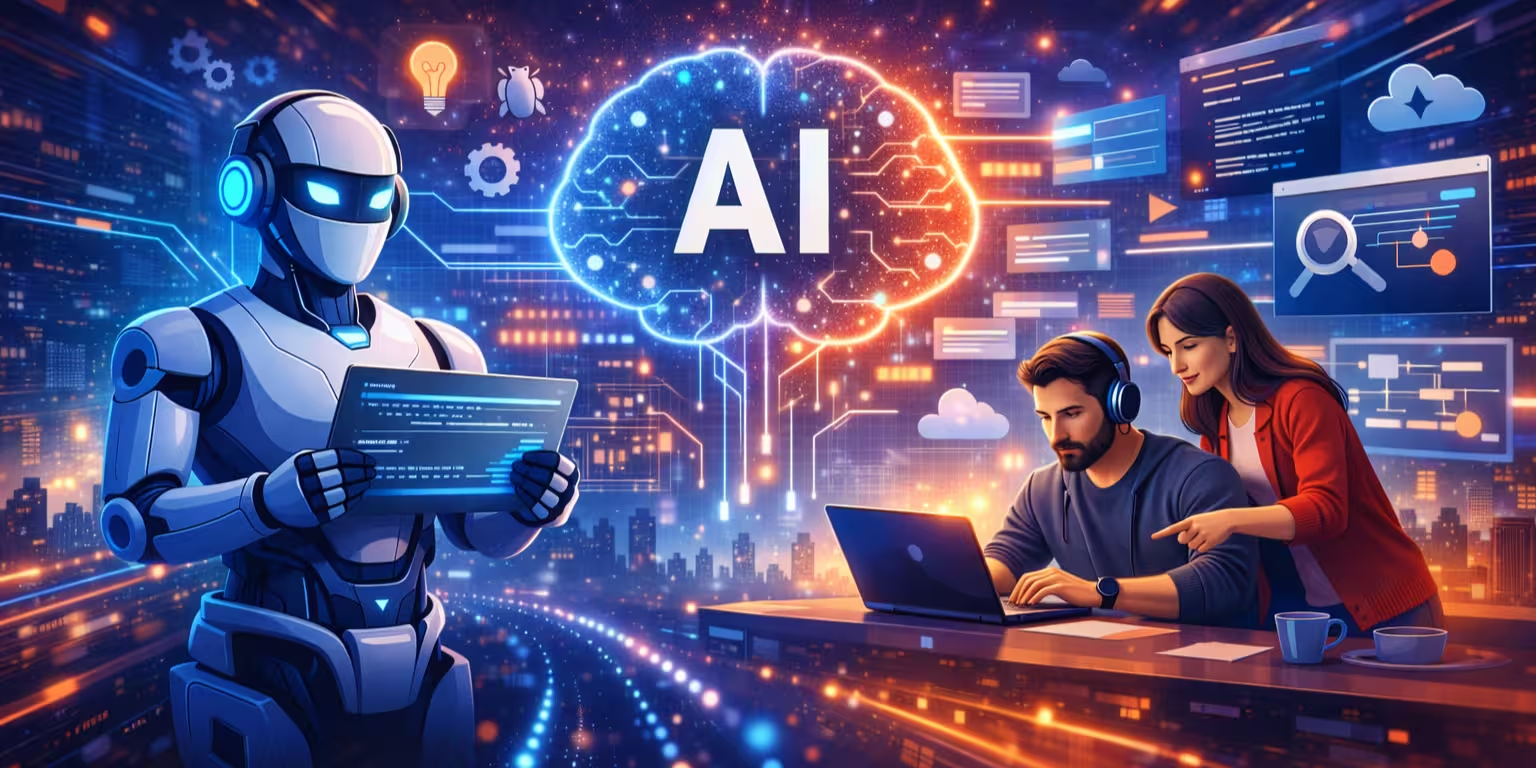
The biggest change AI brings is not just speed. It is the shift toward a new way of working. Software development is becoming a collaboration between human creativity and machine assistance. Humans bring context, strategy, imagination, ethics, and responsibility. AI brings speed, pattern recognition, and automation.
This combination can lead to better software being built faster, with less repetitive work and more focus on innovation. Teams that learn how to use AI wisely will likely gain a strong advantage in productivity and quality.
At the same time, the best results will come from balance. AI should support developers, not control them. It should improve the workflow, not remove the need for careful thinking. The future of software development will belong to teams that know how to use AI as a powerful tool while still relying on human expertise.
Conclusion
AI is changing software development in every stage of the process. It is helping developers write code faster, learn more easily, debug problems, improve testing, and make smarter decisions. It is also reshaping the skills developers need and the way teams work together.
However, AI is not a complete replacement for human developers. It is a tool that becomes most powerful when used with experience, judgment, and responsibility. The future of software development will not be AI alone. It will be developers working alongside AI to build software that is faster, smarter, and more useful than ever before.
If you are a developer, learning how to use AI effectively is no longer optional. It is becoming an important part of staying competitive, productive, and ready for the future.